

The Golden Rule: Life Safety Before Property Diagnostics
Natural gas (methane) is a highly combustible hydrocarbon fuel. While exceptionally safe when contained within code-compliant piping, escaping natural gas mixes with ambient oxygen to form a volatile air-fuel mixture. When concentration reaches between 5% and 15% by volume (the lower and upper explosive limits), any tiny electrical arc—such as toggling a wall light switch, operating a garage door opener, or even the relay click of a refrigerator thermostat—can trigger an instantaneous ignition. Never spend time searching for where the leak is originating; evacuation is your only immediate priority.
Need Immediate Plumbing Assistance?
Call (321) 559-0657 to connect directly with an independent local plumber in San Mateo County.
Why Natural Gas Smells Like Rotten Eggs: Mercaptan Chemistry
In its natural geological state, methane is completely odorless, colorless, and tasteless. Because undetected leaks in residential properties could prove fatal, federal and California regulations mandate that utility providers inject a chemical odorant known as tert-butyl mercaptan into the gas stream before distribution. This sulfur-based compound produces an unmistakable, pungent rotten-egg aroma detectable by the human nose at concentrations as low as 1%, providing an early warning long before gas reaches dangerous combustible levels.
The 4 Things You Must NEVER Do When You Smell Gas
Avoid these critical hazards that could ignite concentrated natural gas within an enclosed structure:
- •Never touch light switches or unplug appliances. Flipping a switch creates a microscopic electrical spark inside the wall junction box.
- •Never use landline phones or smartphones inside the structure. Battery contacts and electrical relays can generate micro-static charges.
- •Never start vehicles or operate automatic garage door openers. Electric starter motors and overhead chain drives produce prominent friction sparks.
- •Never attempt to light matches, candles, or turn on gas range burners to see if fuel is flowing.
Evacuation Protocol and Emergency Contacts
Gather all household members and pets and exit immediately. Leave the front door open as you leave to allow cross-ventilation. Move at least 100 feet away from the structure and upwind of the property before using your mobile phone. Once safely positioned, dial 911 to alert local fire rescue and call Pacific Gas and Electric (PG&E) at 1-800-743-5000. Both agencies maintain 24/7 immediate emergency response protocols across San Mateo County.
Understanding PG&E Red Tags and Meter Lockouts
When PG&E service technicians arrive on-site, they deploy handheld combustible gas indicators to survey the perimeter and interior rooms. If their instruments verify active leakage inside customer-owned piping (the piping downstream of the utility gas meter), the technician will immediately turn off the gas cock, apply a padlock to the valve, and issue a formal "Red Tag" notice. Under California law, utility technicians are prohibited from performing interior residential piping repairs; the homeowner must engage an independent licensed Class C-36 plumbing contractor to test, repair, and certify the system.
How a Licensed C-36 Plumber Restores Gas Service
Clearing a PG&E Red Tag requires strict adherence to California Plumbing Code Chapter 12. A licensed plumbing contractor will isolate the gas supply manifold, disconnect sensitive appliance valves, and connect a calibrated pressure manometer gauge to the piping system. The lines are pressurized with air or nitrogen to a minimum of 10 to 15 PSI (substantially higher than normal operating pressure of 0.25 PSI) and monitored for pressure decay. Once pinholes, degraded pipe dope, or loose union fittings are repaired and the pressure holds steady, the municipal building inspector certifies the repair and authorizes PG&E to unlock the meter.
Seismic Earthquake Automatic Gas Shutoff Valves
Positioned adjacent to the San Andreas Fault running along Skyline Boulevard and I-280, Peninsula homes face significant seismic ground shaking risks. Major earthquake ground displacement frequently ruptures rigid threaded gas lines leading to water heaters, furnaces, and stoves. Installing an automatic motion-activated seismic gas shutoff valve at your gas meter isolates the entire household gas supply during a magnitude 5.1+ earthquake, preventing catastrophic post-quake house fires.
Technical Field Visuals & Reference Equipment
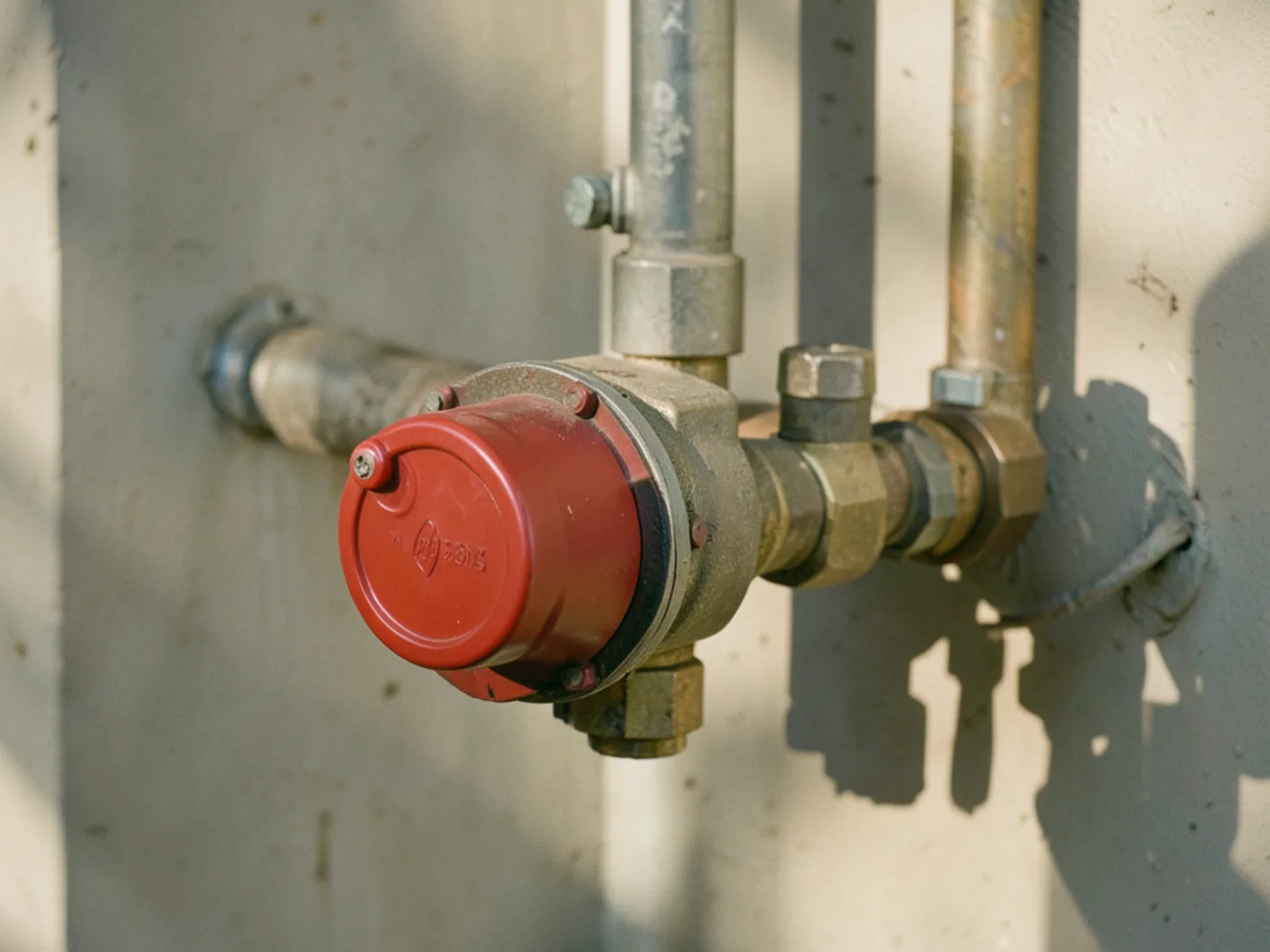
Motion-sensitive seismic shutoff valve attached to residential gas service line
Seismic gas shutoff valve designed to automatically stop natural gas flow during earthquake shaking
Residential pressure reducing valve regulating municipal water pressure to a safe 60 PSI
Conclusion & Next Steps for Peninsula Property Owners
Addressing urgent plumbing faults across San Mateo County requires balancing immediate safety isolation with long-term code compliance. Whether dealing with a sudden slab leak, earthquake gas shutoff compliance, or an aging sewer lateral, working with a licensed Class C-36 contractor guarantees proper permits and durable repairs.
Questions Addressed in This Guide
Specific answers addressing safety protocols, local building codes, and diagnostic steps.
Evacuate all family members and pets immediately without touching any light switches, electrical appliances, or phones. Walk to a safe location at least 100 feet away before calling 911 and PG&E.
Verified Research Sources & Regulatory References
The technical, legal, and regulatory statements on this page are corroborated against publicly accessible municipal codes, state licensing statutes, and utility guidelines:
- •PG&E Gas Safety Standards — Pacific Gas and Electric Company: Gas Emergency Response Procedures & Red Tag Compliance Guidelines.
- •California Plumbing Code Ch 12 — 2022 California Plumbing Code: Fuel Gas Piping Installation, Testing, and Inspection Standards.
- •California Seismic Safety Commission — Homeowner Guide to Earthquake Safety: Seismic Gas Shutoff Valves and Water Heater Bracing.