

Why Sewer Laterals Make or Break Peninsula Real Estate Escrow
In San Mateo County's competitive real estate market, undisclosed sewer line defects are among the most common causes of delayed closings and contentious escrow disputes. Because most Peninsula housing stock was constructed between 1920 and 1965 using vitrified clay or cast-iron pipes, thousands of private sewer lines have reached the end of their operational lifespan. To protect regional water quality and prevent sewage spills, local municipalities enforce strict point-of-sale ordinances that make lateral certification a legal closing requirement.
Need Immediate Plumbing Assistance?
Call (321) 559-0657 to connect directly with an independent local plumber in San Mateo County.
What Is a Private Sewer Lateral and Who Owns It?
A Private Sewer Lateral (PSL) is the underground drainage pipe connecting a building's interior plumbing to the municipal sewer main located in the public street or rear utility easement. In almost every Peninsula jurisdiction, the property owner is legally responsible for the entire length of the lateral—including the section running beneath the front lawn, sidewalk, and street pavement up to the connection hub (the "wye" or "saddle") at the city main.
City-by-City Municipal Ordinance Comparison
Sewer lateral testing mandates differ significantly across San Mateo County municipalities. Review the trigger mechanisms and standards enforced in your city:
| City / District | Ordinance Code | Primary Mandatory Triggers | Compliance Certification Validity |
|---|---|---|---|
| City of San Mateo | Municipal Code Ch 7.38 (PSLO) | Property sale/transfer; remodels >$90,000; repeated sewer spills | 10 Years (repair/replacement) / 3 Years (passed inspection) |
| Burlingame | Municipal Code Ch 15.12 | Property sale/transfer; remodels >$50,000; commercial transfers | 10 Years (certified repair) |
| Millbrae | Municipal Code Ch 8.25 | Property sale/transfer; major structural remodel permits | 10 Years with video proof |
| West Bay Sanitary District | District Code Section 6 | Major building additions; transfer of title in select zones | 10 Years with district permit |
| Redwood City | City Municipal Code | Significant additions over 500 sq ft; chronic lateral backups | Case-by-case building review |
The Inspection Process: Cleanout to City Certificate
Fulfilling municipal inspection requirements requires hiring a licensed Class C-36 plumbing contractor equipped with a self-leveling optical CCTV sewer camera. The plumber accesses the lateral via an exterior cleanout, feeding the camera reel down the entire length to the city main while recording high-definition video. The video must document the physical condition of the pipe wall, verify the absence of root intrusion, check for pipe sagging ("bellies"), and confirm there are no illegal downspout or yard drain connections. The digital video and inspection log are submitted to the city public works department for formal review.
What Causes Laterals to Fail Municipal Inspection?
Peninsula laterals fail municipal certification primarily due to three factors: aggressive tree roots, pipe offset joints, and structural cracking. Burlingame's dense street tree canopy and Hillsborough's heritage oaks send hairline root fibers into clay pipe joints seeking water. Over time, roots expand, fracturing the pipe. In hillside cities like Belmont, soil creep shears clay joints. In bay-fill areas like Foster City and Redwood Shores, differential soil compaction creates deep pipe sags where waste stagnates.
Repair Technologies: Trenchless Pipe Bursting vs. Open Trenching
When a sewer lateral fails inspection, modern trenchless pipe bursting is the preferred remediation method across San Mateo County. Rather than digging a continuous 6-foot-deep trench across stone driveways, manicured lawns, and city sidewalks, technicians dig two small access pits. A conical bursting head attached to seamless High-Density Polyethylene (HDPE) pipe is pulled through the old line, fracturing the damaged clay pipe outward while immediately pulling the new seamless pipe into place. The new HDPE pipe has zero joints, is completely impervious to tree roots, and carries a 50+ year operational lifespan.
Escrow Repair Holdbacks: Closing When Repairs Are Pending
If a property transaction must close before lateral repairs can be completed, most Peninsula cities allow an Escrow Holdback Agreement. Under this arrangement, the buyer and seller deposit 150% of the estimated repair cost (typically $7,500 to $12,000) into an escrow account held by the title company. The city issues a conditional transfer clearance, granting the new owner 90 to 180 days after closing to complete the repairs and receive full certificate release.
Technical Field Visuals & Reference Equipment
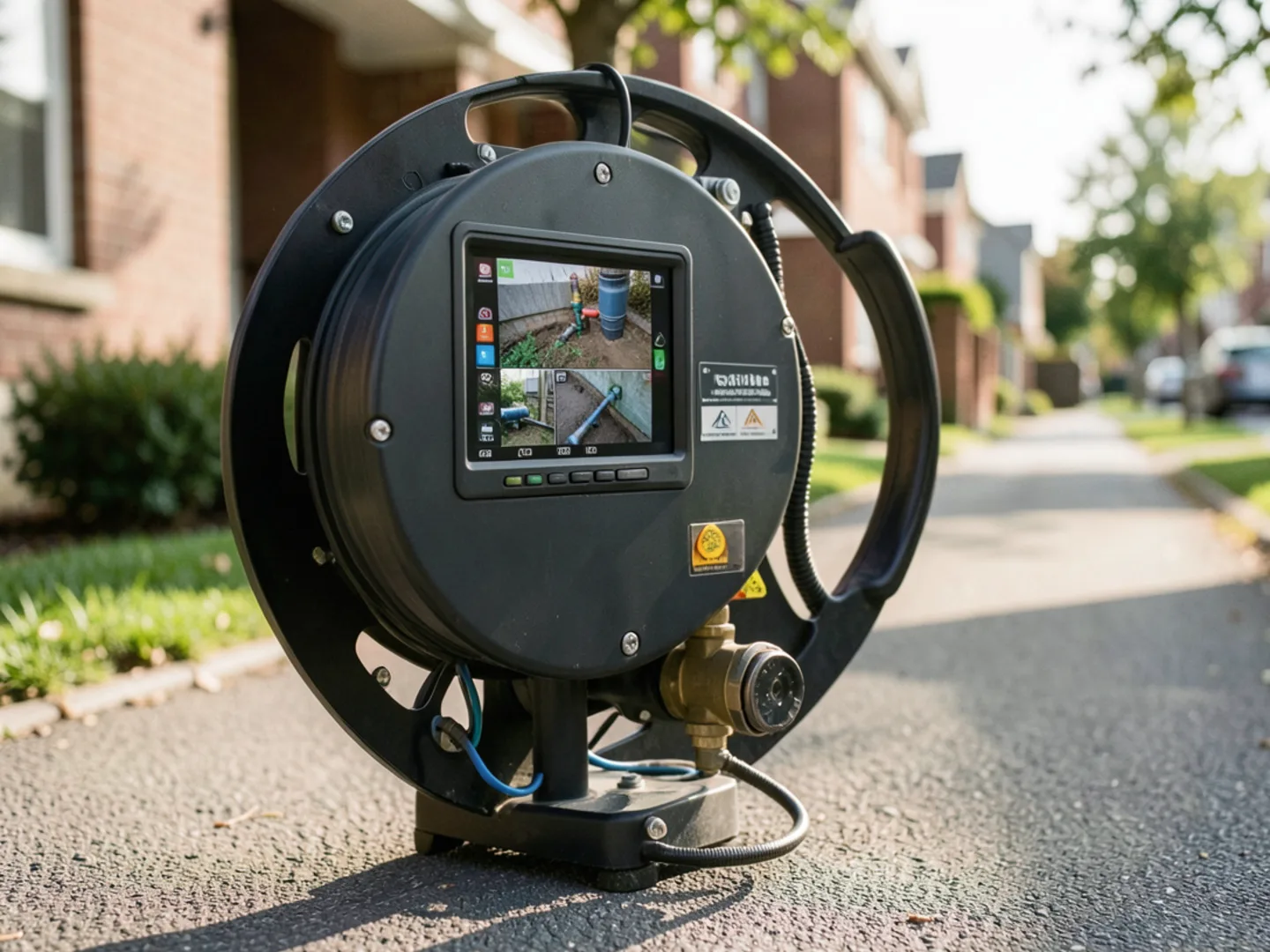
Inserting a fiber-optic camera into an exterior cleanout to locate underground pipe obstructions

Closed-circuit television (CCTV) monitor showing real-time camera inspection footage of a sewer pipe

High-pressure scouring nozzle used to clear mineral scale and root growth from main sewer laterals
Conclusion & Next Steps for Peninsula Property Owners
Addressing urgent plumbing faults across San Mateo County requires balancing immediate safety isolation with long-term code compliance. Whether dealing with a sudden slab leak, earthquake gas shutoff compliance, or an aging sewer lateral, working with a licensed Class C-36 contractor guarantees proper permits and durable repairs.
Questions Addressed in This Guide
Specific answers addressing safety protocols, local building codes, and diagnostic steps.
By local custom, the seller typically pays for the initial video camera inspection and provides the compliance certificate, though repair costs can be negotiated between buyer and seller during escrow.
Verified Research Sources & Regulatory References
The technical, legal, and regulatory statements on this page are corroborated against publicly accessible municipal codes, state licensing statutes, and utility guidelines:
- •City of San Mateo PSLO Guidelines — City of San Mateo Public Works Department: Private Sewer Lateral Ordinance Overview (Municipal Code Chapter 7.38).
- •Burlingame Municipal Code Ch 15.12 — City of Burlingame Municipal Code: Private Sewer Lateral Point of Sale Regulations.
- •San Mateo County Clean Water Program — San Mateo Countywide Water Pollution Prevention Program: Sanitary Sewer Overflow Prevention.