
The 1950s Peninsula Housing Boom and Galvanized Steel Piping
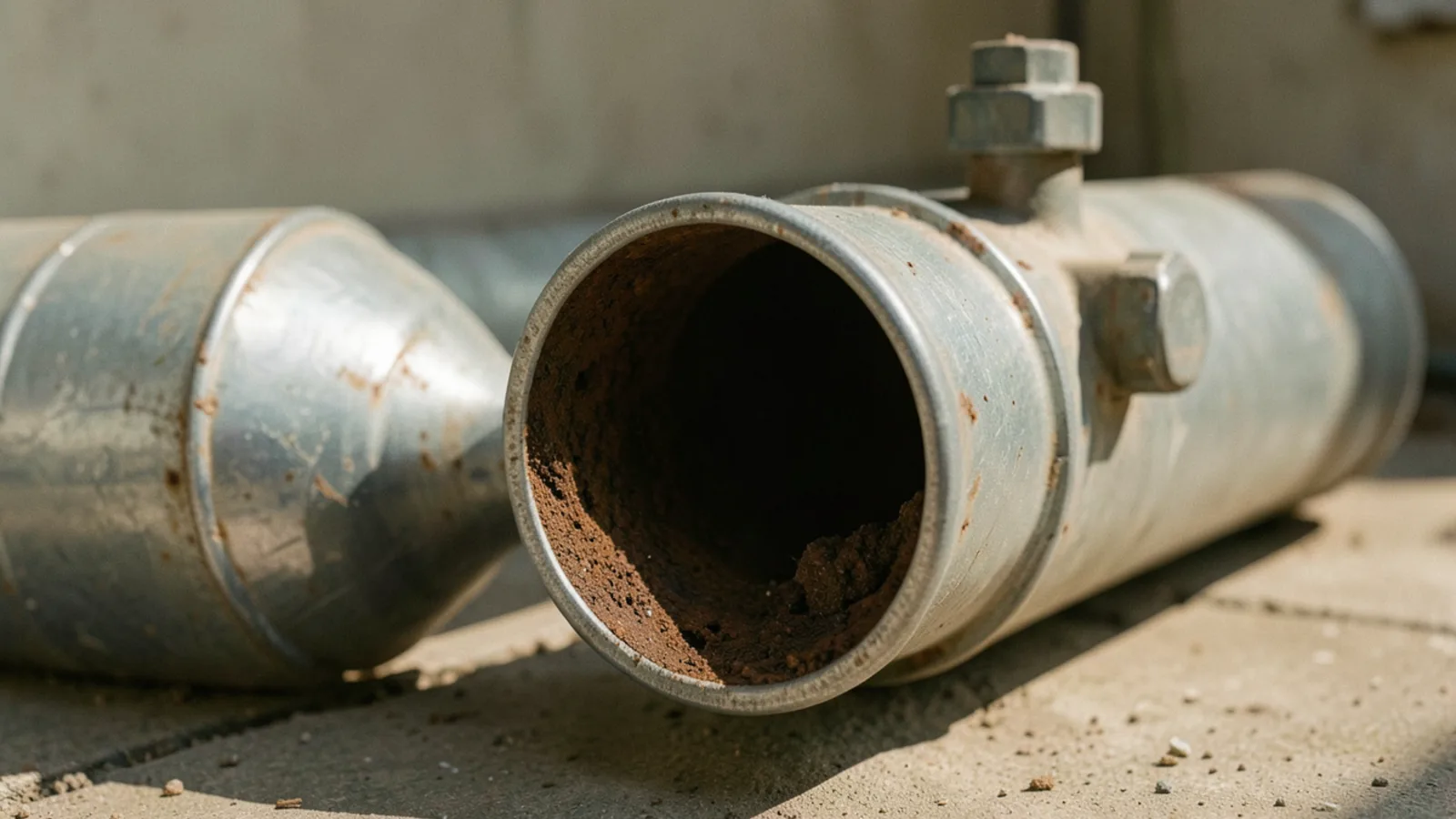
During the post-World War II housing expansion of the 1940s and 1950s, tens of thousands of suburban homes were constructed across San Mateo County—including major tracts in San Carlos White Oaks, San Bruno Crestmoor, and Burlingame Ray Park. The universal plumbing standard of this construction era was galvanized steel pipe: heavy carbon steel tubing dipped in molten zinc to prevent exterior rust. However, plumbers of the era could not anticipate that 70 years later, these pipes would reach universal terminal failure.
Need Immediate Plumbing Assistance?
Call (321) 559-0657 to connect directly with an independent local plumber in San Mateo County.
The Internal Corrosion Process: Why Rust Tuberculation Occurs
Over decades of continuous exposure to municipal water, the protective internal zinc coating on galvanized pipes dissolves. Once the bare iron core is exposed, water and dissolved oxygen trigger internal oxidation (rust). This produces rust tubercles—calcified, jagged nodules that grow inward from the pipe walls. Over 50 to 70 years, a pipe with an original 3/4-inch inside diameter becomes choked down to the thickness of a pencil lead, severely restricting water volume while rusting the pipe wall paper-thin.
The 4 Classic Symptoms of Failing Galvanized Pipes
Peninsula homeowners with aging galvanized systems experience four chronic warning signs:
- •Rusty, Brown Tap Water in the Morning. Water sitting overnight in corroded iron pipes absorbs rust particles, producing yellow or reddish-brown water from faucets during first morning use.
- •Severely Restricted Shower and Fixture Flow. When someone flushes a toilet or runs a garden hose, shower pressure drops to a trickle due to choked internal pipe diameters.
- •Unexplained Pinhole Seep Leaks. Thinning pipe walls rupture at threaded joint fittings inside crawlspaces, basements, and walls.
- •Metallic Taste and Laundry Staining. High iron content in domestic water leaves dark stains on white porcelain sinks and laundered clothing.
Why Clamping and Spot Repairs Lead to Cascading Failures
When a galvanized pipe develops a pinhole leak, homeowners frequently request an emergency spot repair or mechanical pipe clamp. While a clamp provides a temporary 24-hour stabilization, spot repairs on aged galvanized systems are notoriously risky. When a plumber cuts into fragile, corroded galvanized iron to thread on a replacement fitting, the mechanical vibration and torque often snap neighboring brittle threads further down the line, triggering cascading leaks across adjacent walls.
Modern Piping Comparison: Uponor PEX-a vs. Type L Copper
When permanently replacing galvanized plumbing, Peninsula property owners select between cross-linked polyethylene (PEX-a) and traditional copper tubing:
| Feature | Uponor PEX-a Expansion | Type L Domestic Copper | Original Galvanized Steel |
|---|---|---|---|
| Operational Lifespan | 50+ Years | 50+ Years | 30–50 Years (exhausted) |
| Internal Corrosion | Completely immune (smooth plastic) | Immune to normal water; susceptible to low pH | Severe internal rust & scale |
| Earthquake Resilience | High (expands up to 3x diameter) | Moderate (rigid; soldered joints can shear) | Low (brittle threads snap under ground motion) |
| Attic / Wall Routing | Flexible continuous runs; minimal fittings | Rigid sections; requires wall openings | Heavy rigid threaded iron |
| Installed Cost Range | Moderate (faster installation) | Higher (materials & soldering labor) | Obsolete / banned for new installs |
The Whole-Home Repiping Process: Step-by-Step
A professional whole-home repiping project in a typical single-family Peninsula home takes between 3 and 5 days. On Day 1, technicians map out optimal pipe routes and cut precision access ports in drywall. On Days 2 and 3, new Uponor PEX-a or copper distribution lines are routed through attic spaces, crawlspaces, and interior walls, connecting to new lead-free quarter-turn shutoff valves at every fixture. On Day 4, the system undergoes a municipal pressure inspection by the city building inspector. On Day 5, access openings are patched, textured, and prepared for paint.
Permit and Inspection Rules in San Mateo County
Under California Plumbing Code Chapter 6, whole-home repiping requires a formal building permit issued by your local municipal building department (e.g., City of San Carlos Building Division or San Mateo Community Development). A city inspector verifies that pipe sizing meets fixture unit requirements, seismic strapping and nail plates protect lines from drywall screws, and static water pressure testing confirms zero leaks.
Technical Field Visuals & Reference Equipment
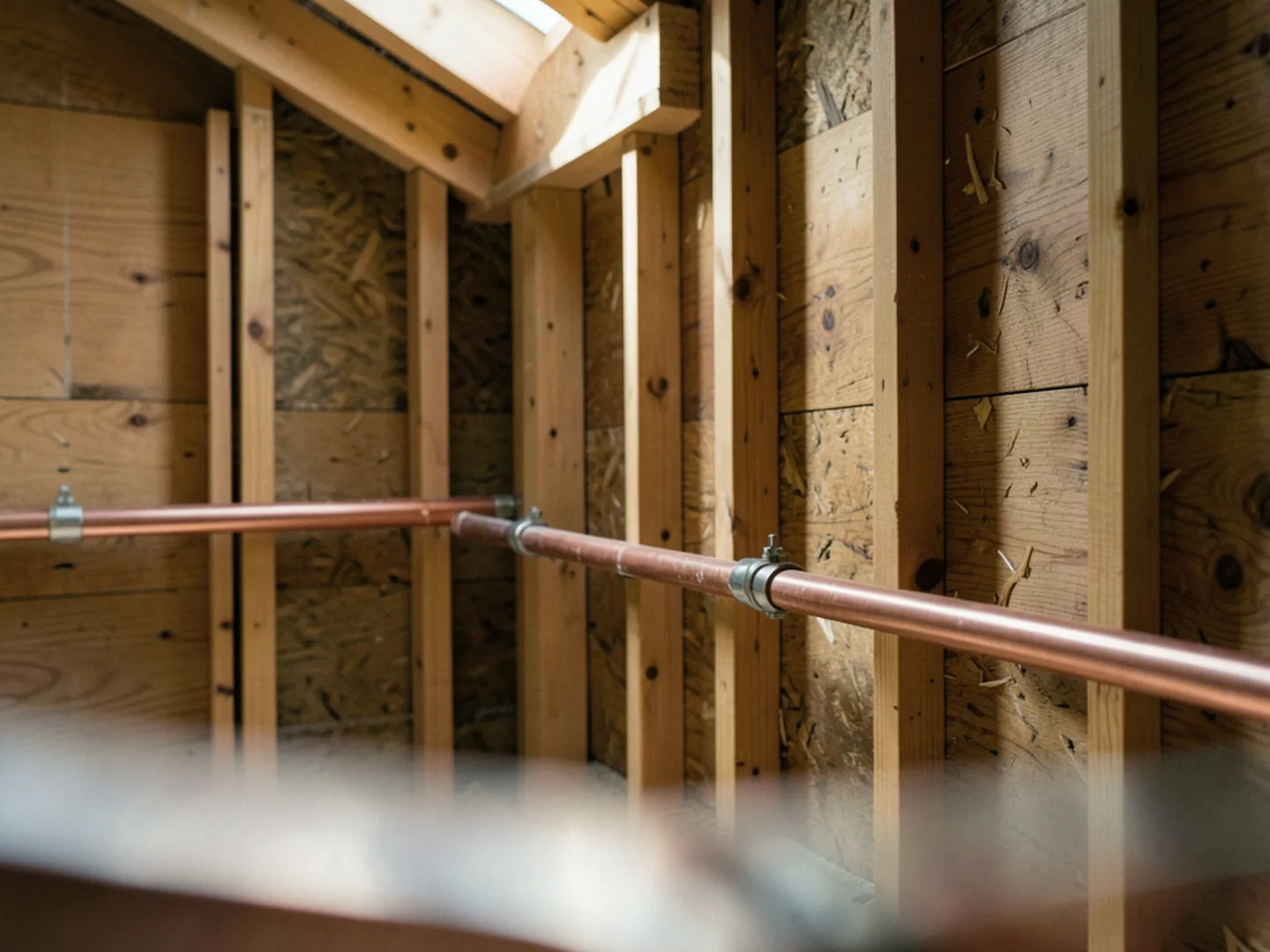
Rigid copper supply lines installed during a residential whole-home repiping project

Modern cross-linked polyethylene (PEX) manifold for whole-home water distribution
A clean copper water supply pipe joint installed to California plumbing standards
Conclusion & Next Steps for Peninsula Property Owners
Addressing urgent plumbing faults across San Mateo County requires balancing immediate safety isolation with long-term code compliance. Whether dealing with a sudden slab leak, earthquake gas shutoff compliance, or an aging sewer lateral, working with a licensed Class C-36 contractor guarantees proper permits and durable repairs.
Questions Addressed in This Guide
Specific answers addressing safety protocols, local building codes, and diagnostic steps.
While possible during kitchen or bathroom remodels, partial repiping leaves aged galvanized main supply lines intact, continuing to circulate rust particles into your new fixtures.
Verified Research Sources & Regulatory References
The technical, legal, and regulatory statements on this page are corroborated against publicly accessible municipal codes, state licensing statutes, and utility guidelines:
- •ASPE Technical Standards — American Society of Plumbing Engineers: Domestic Water Heating and Piping Design Standards.
- •California Plumbing Code Ch 6 — 2022 California Plumbing Code: Water Supply and Distribution System Regulations.
- •City of San Carlos Building Division — City of San Carlos Community Development: Residential Repiping Permit & Inspection Protocols.